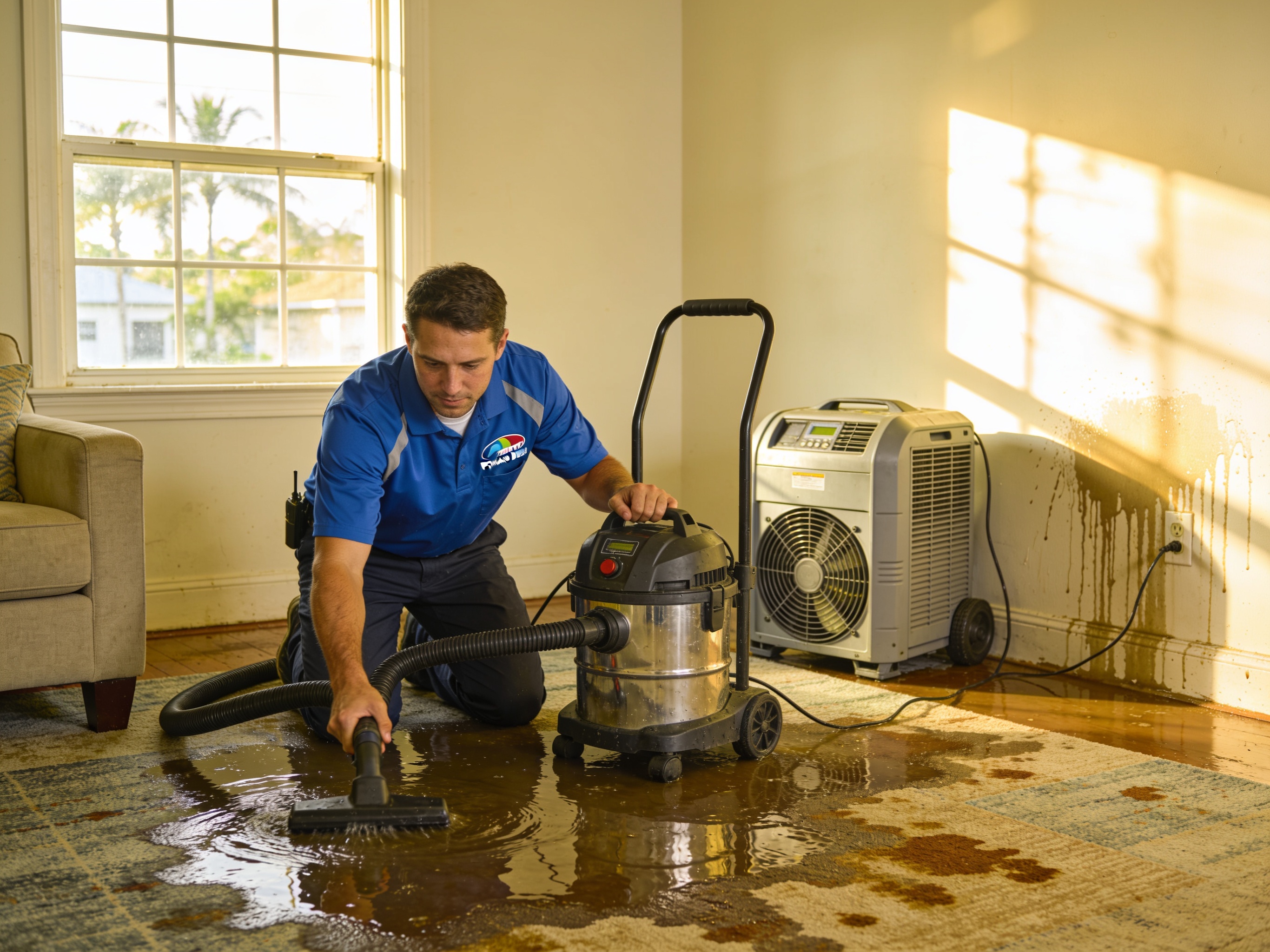
Lighthouse Point is the smallest city in this service area, with 10,756 residents living in a community shaped by canals at Hillsboro Inlet. In a place where nearly every home sits on or near the water, water damage lighthouse point homeowners face often starts with the same realities: canal exposure, wind-driven rain, and plumbing problems inside established waterfront houses. When water gets in, the goal is simple: stop the source, remove moisture, and repair what the water affected before small problems spread.
Water Damage in Lighthouse Point: The Local Picture
Homes and households in a waterfront community
Lighthouse Point is largely a homeowner community. About 77.3% of housing units are owner-occupied, across 5,373 households. The local housing stock is known for high-value waterfront homes, and many properties are canal-front single-family homes set along the waterways or close to the Intracoastal. That setting brings real benefits, but it also means water intrusion can affect finished interiors, cabinetry, flooring, and lower-level spaces that sit close to the waterline. Residents age 65 and over make up 29.3% of the population, the highest share in this service area. For older homeowners, clear communication, predictable scheduling, and careful attention to access inside the home can make a stressful situation easier to manage without adding confusion during cleanup and repair. A steady, well-explained process helps households focus on protecting the home and making informed decisions.
Permits and storm damage repairs
If your home needs repairs after a storm, it is smart to confirm permit requirements before work begins. Lighthouse Point’s Building Department advises checking before storm-damage repairs. That guidance matters because the right answer depends on the scope of work. Some projects may involve structural elements, electrical systems, plumbing, or exterior components that require review, while other cleanup steps may not. A careful approach starts with documenting what was damaged as it is found, defining the repair scope in writing, and confirming requirements before work begins so repairs are not started on the wrong footing. Taking that step early can help avoid delays once repairs are ready to move forward and can keep decisions clear if conditions change. It also helps everyone understand what the project includes from the start.
Canal-front water problems
Water problems in Lighthouse Point often reflect the way homes are built around the canals. Dock-adjacent and seawall-adjacent areas can see intrusion when heavy weather pushes water toward the property. Storm surge and wind-driven rain can force moisture into doors, windows, roof edges, and exterior openings, especially during fast-moving coastal storms. Inside the home, plumbing failures in established homes can create a different kind of emergency, such as a burst supply line, a leaking fixture, or an overflow that soaks walls and floors before anyone notices. Water may also collect near ground-level transitions and move into nearby rooms. Whether the water comes from outside or inside, the path forward is the same: identify where it entered, remove wet materials that cannot be saved, and dry the structure thoroughly.
Exposure to tidal water, canal water, and heavy rain
Lighthouse Point homes live with regular exposure to tidal and canal water, along with periods of heavy rain. That combination can make moisture management an ongoing concern, particularly for properties close to the water or in low areas of a lot. After a storm or plumbing event, damp building materials may stay wet longer when outdoor humidity is high and shaded areas do not dry quickly. Repeated wetting from rain or tidal conditions can also reveal weak points around exterior openings, drainage paths, and ground-level transitions. Because conditions vary from property to property, the most useful response is a careful inspection of affected areas, moisture checks where needed, and a drying plan matched to the materials in the home. Paying attention to how water moves on and around the property can guide more effective cleanup.
Water Damage Services in Lighthouse Point
Water damage repairs
After water is removed and the affected areas are dry, the next step is putting the home back together. This service focuses on the materials and finishes that water can ruin, such as drywall, trim, flooring, and other interior components. We document the scope of work so you know what is being repaired and why. For Lighthouse Point homeowners, that clear scope is especially helpful when storm-related damage overlaps with older wear or when repairs must be coordinated around occupied rooms. Learn more about our water damage repairs.
Water extraction
Fast water removal limits how far moisture can travel through a home. This service is designed to get standing water out, address wet surfaces, and set up the conditions needed for proper drying. In canal-front homes, water can reach multiple rooms or settle into low points near exterior walls, so timing matters. Extraction is the first practical step after the source is under control, and it helps reduce the chance that moisture will remain trapped in flooring systems, baseboards, or wall cavities. Learn more about our water extraction.
Mold remediation
When moisture lingers, mold can become a concern. This service addresses visible growth and the conditions that allow it to develop, with attention to containment and careful cleanup of affected materials. In a waterfront setting like Lighthouse Point, ambient moisture and repeat wetting can make follow-through important after any water event. Remediation works best when it is paired with a clear understanding of where moisture came from and what needs to dry or be corrected so the problem does not return. Learn more about our mold remediation.
Why Lighthouse Point Homeowners Choose Us
Homeowners in Lighthouse Point want help from a team that understands nearby conditions and communicates clearly. We operate from our nearby Pompano Beach address at 1820 NE 36th St, Pompano Beach, FL 33064, and we serve Lighthouse Point as part of the surrounding area. When you call, you reach us at (954) 994-1851, and that is the same number we use across our service information.
We focus on practical steps: assess the damage, explain the scope in writing, and move through extraction, drying, and repair in a logical order. That written scope helps you understand what is included and how the work will progress from one stage to the next. We are also straightforward about local requirements. For storm repairs, Lighthouse Point’s Building Department advises checking before storm-damage repairs, and we encourage homeowners to confirm permit expectations for their specific project before work begins. That honesty helps you plan the job with fewer surprises and keeps the process organized.
Why Water Damage in Lighthouse Point Should Not Wait
In a canal-front community, waiting on water damage can make recovery harder. Moisture that remains in floors, walls, or built-ins can keep materials damp long after the surface looks dry. Salt-adjacent air and regular waterfront humidity can slow that drying process, especially in shaded rooms or spaces with limited airflow. If materials stay wet, odors can develop, finishes can warp, and hidden growth may take hold in wall assemblies and other places that are difficult to see during a quick walkthrough.
Repeat wetting is another concern in Lighthouse Point. A home that has dealt with storm-driven rain, tidal influence near the property, or a plumbing failure may face similar exposure again. When tidal or rain wetting returns before the first incident is fully dried and repaired, uncorrected moisture can be re-fed and the damage can compound. Acting quickly helps limit how far water spreads, supports a more accurate repair scope, and gives you a better chance of addressing the underlying moisture path before it becomes a recurring issue. Careful drying and timely repairs also make it easier to confirm which materials can be restored and which need replacement, reducing uncertainty as work moves forward.
Water Damage Questions Lighthouse Point Homeowners Ask
Do storm damage repairs in Lighthouse Point need a permit?
It depends on the scope of the work. Lighthouse Point’s Building Department advises checking before storm-damage repairs. If a project involves structural changes, electrical work, plumbing, or other regulated elements, a permit may be required. Even when the damage seems straightforward, confirming requirements early can prevent delays. A good starting point is to document the affected areas, outline the planned repairs, and verify what applies to that specific job before work begins.
My canal-front home took in water — what gets repaired first?
The first priority is safety and stopping the source of the water if it is still active. After that, water extraction and drying come before most repairs. Removing standing water and reducing moisture in building materials helps prevent further damage and gives a clearer picture of what can be saved. Once the affected areas are dry, repairs can be scoped in writing, including materials that need replacement and finishes that need to be restored. That sequence helps avoid repairing over hidden moisture.
Why does mold matter more in a waterfront home?
Waterfront homes often deal with higher ambient moisture and a greater chance of repeat wetting from heavy rain or canal-adjacent conditions. When building materials stay damp, mold can develop in concealed areas such as wall cavities, under flooring, or behind cabinets. That does not mean every water event leads to mold, but it does mean drying and follow-up matter. Addressing moisture quickly, checking affected materials, and correcting the source of water intrusion can reduce the conditions that allow growth to continue.
How much does water damage restoration cost in Lighthouse Point?
Costs vary based on the details of the damage, so it is more useful to look at the factors involved. The size of the affected area, the type of water involved, how long materials have been wet, and what needs to be removed or rebuilt all influence the scope of work. Access to the damaged areas, the drying time required, and whether storm-related repairs trigger permit review can also affect the process. A written assessment after inspection is the best way to understand what your home needs.
Can a small plumbing leak still cause serious damage?
Yes. A slow leak can soak drywall, insulation, flooring edges, or cabinet bases over time, especially if it runs behind a wall or under a fixture. Because the water may not be obvious at first, materials can stay damp long enough to swell, stain, or weaken. In Lighthouse Point homes, where humidity can already be high, trapped moisture may take longer to dry on its own. If you suspect a leak, it helps to address the source, check nearby materials for moisture, and dry the area thoroughly before closing everything back up.
Talk with a local team about water damage in Lighthouse Point
If your Lighthouse Point home has taken in water, we can help you sort out the next steps, from extraction and drying to repairs and follow-up where moisture is a concern. Call (954) 994-1851 to discuss what happened and what areas of the home were affected. You can also reach us through our contact page to request a call back. We will focus on clear communication, a written scope, and a practical plan for getting your home back in order.