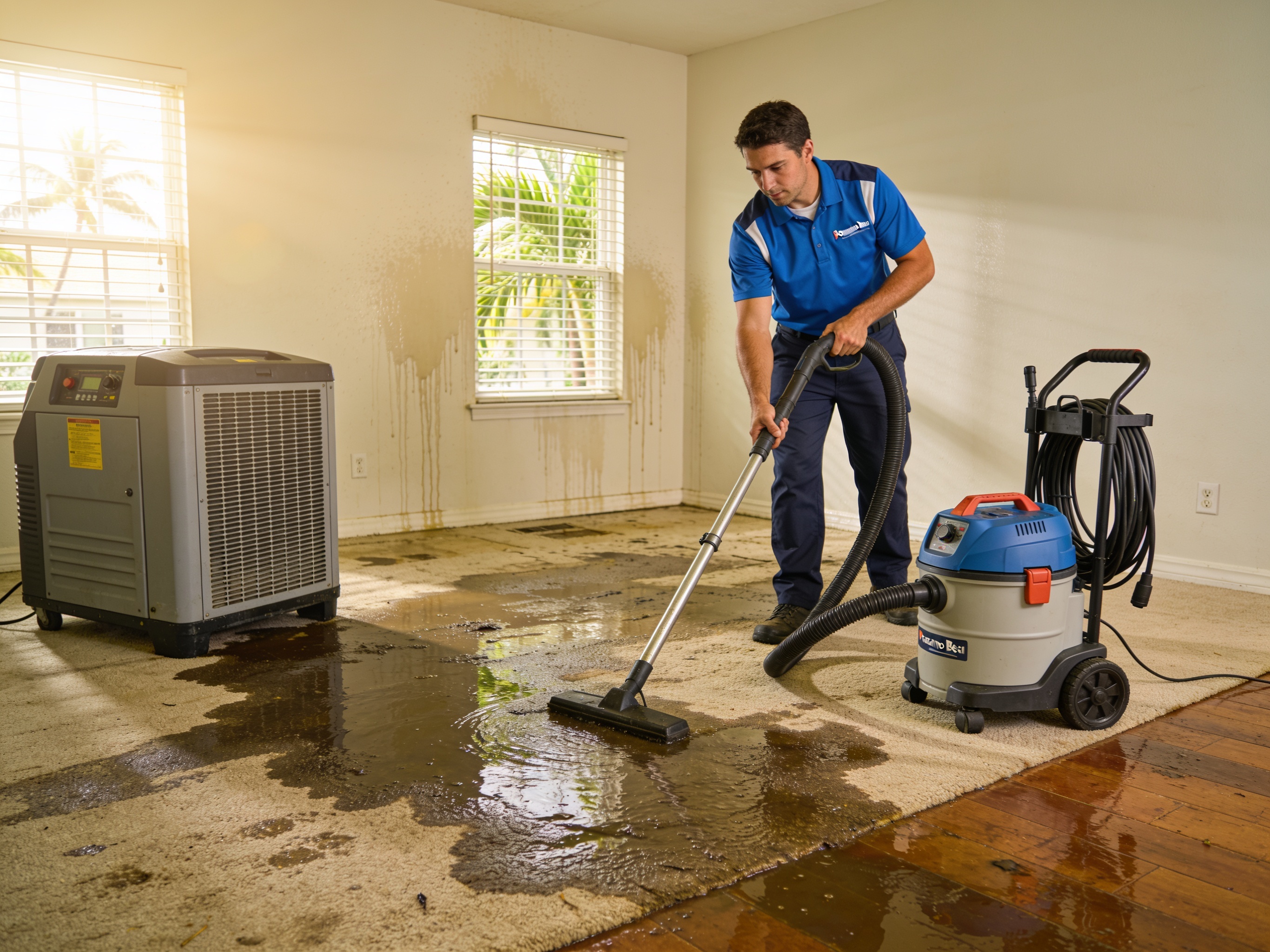
Why Pompano Beach Homeowners Choose Us for Water Extraction
When water is spreading through a home, the first priority is stopping the source so the loss does not keep growing. After the source is under control, extraction is matched to the type of water involved and the surfaces it has reached. Clean supply-line water, appliance overflow, and contaminated water do not call for the same handling, and hard surfaces, carpet, padding, and wall assemblies each respond differently to water removal. The goal is to remove standing water in a way that fits the conditions found in the home, not to treat every loss the same.
Drying is handled with the same care as extraction. A room can feel dry to the touch while moisture remains inside drywall, framing, subflooring, or insulation. For that reason, drying is verified with moisture readings rather than declared finished based on appearance or time alone. Materials are checked, drying equipment is adjusted as conditions change, and the process continues until readings show the affected areas have reached an appropriate dry condition.
If materials or finishes need replacement after the structure is dry, that repair scope is explained in writing so the homeowner understands what drying addressed and what work still remains. The condition of the loss is also documented as found, including visible damage and the areas affected. That record helps homeowners keep track of what happened, what was removed, and how the drying process was verified. Clear documentation and honest handoff matter when extraction is only the beginning of putting a home back in order.
Why Standing Water in Pompano Beach Should Not Wait
Standing water creates damage in layers, and much of that damage happens out of sight. Water moves by capillary action, which means it can travel upward into drywall and outward into insulation, baseboards, and framing. Flooring may cup, separate, or loosen as moisture reaches the material beneath it. Subfloors can absorb water and stay wet long after surface water is gone. The longer water remains in contact with building materials, the more likely it is that those materials will need removal or repair instead of drying in place.
Electrical hazards are another concern when water reaches outlets, cords, appliances, or circuits. A room with standing water is not a safe place to move through without caution, especially when the source of the water or the status of the power is unclear. Water can also carry contaminants depending on where it came from, which affects how surfaces and contents should be handled. Even water that starts as a clean supply issue can create unsanitary conditions if it sits long enough or spreads into affected materials.
Moisture left inside assemblies can also support mold growth. Mold does not need a visible pool of water to develop; damp drywall, wet insulation, and moist wood can hold enough moisture to create a problem. In Broward County, heavy rain can add pressure to an already wet situation. The county experienced a historic rainfall and flash flooding event on April 12–13, 2023, reported by Broward County as a county-wide event. That county context matters because a second wetting can arrive before the first loss is fully dried, making prompt extraction and verified drying even more important.
Proof: How Extraction and Drying Are Verified
A reliable extraction job follows a process that can be checked, not guessed. It begins with identifying the source of the water and stopping it when possible. If the source is still active, extraction alone cannot solve the problem because new water will continue entering the affected area. Once the source is controlled, the water is classified by where it came from. Clean water from a supply line is handled differently from water that may be contaminated, and that classification helps guide safe removal and material decisions.
After classification, standing water is extracted from floors and other surfaces. Extraction removes the bulk of the water, but it does not finish the job. Structural drying follows, using dehumidification and air movement to pull moisture out of affected materials. Moisture mapping helps show where water traveled, including areas that may not look wet from the surface. Repeat readings are taken as drying progresses so the team can see whether materials are actually drying or whether moisture remains trapped.
The work is considered complete only when materials verify dry, not when equipment has simply run for a set period. Photos and a written record document the conditions found, the areas affected, and the steps taken during extraction and drying. This record gives the homeowner a clear account of the loss and supports decisions about any repairs that may follow once the structure is dry.
The Scenario Most Pompano Beach Extraction Pages Skip: The Leak That Was Extracted but Never Dried
A common water loss starts small: a water heater leak spreads across a utility area, laundry room, or garage-adjacent space. The homeowner shuts off the water, mops up what is visible, sets out household fans, and waits until the floor feels dry. On the surface, the problem seems handled. The puddle is gone, the room no longer looks wet, and daily life returns to normal. Weeks later, baseboards begin to swell, paint bubbles near the bottom of a wall, or a musty odor appears in the same area. The original leak was addressed, but the moisture left behind was not.
What was missed is the water that moved into materials the fan could not reach effectively. Drywall can wick moisture upward from its bottom edge. Insulation behind the wall can hold water and slow drying. Flooring systems may trap moisture underneath, especially where water traveled below a surface layer or along seams. A floor that feels dry can still sit above damp materials, and a wall can look normal while its lower section remains wet. Without moisture mapping and verification readings, there is no clear way to know whether the structure is dry or only dry at the surface.
Verification readings would have caught the problem by comparing affected materials to dry areas and tracking changes over time. If readings stayed elevated in baseboards, drywall, or subflooring, drying would continue with equipment placed and adjusted for those materials. If materials could not be dried to an acceptable condition, that would be identified before repairs closed the area back up. The sequence matters: extraction removes standing water, drying addresses moisture in materials, and verification confirms the result.
When growth follows a missed drying step, the next phase may involve mold remediation in addition to moisture correction. That does not mean every wet area leads to mold, but it does show why extraction and drying should be treated as connected parts of the same process. Removing the puddle is only the visible part of the job. Confirming that hidden moisture is gone is what helps prevent a second problem from developing after the first one seemed resolved.
Water Extraction in Pompano Beach, Up Close
Emergency Water Extraction
Emergency water extraction is the immediate response to unwanted water inside a home. It begins with stopping the source when it is safe to do so, then removing standing water so the loss does not keep spreading. Extraction comes before drying and repair because pooled water limits drying and damaged areas should not be rebuilt until moisture is addressed.
After the bulk of the water is removed, structural drying can begin on affected materials. Before help arrives, homeowners should avoid walking through standing water when electrical hazards may be present and should not use household equipment in unsafe conditions. If the water may be contaminated, direct contact should be avoided. The goal is to control the source, limit exposure, and prepare the space for proper extraction and verified drying. Clear steps help protect the home and the people inside it.
Water Removal vs Water Extraction
Homeowners often hear water removal and water extraction used as if they mean different services. On this site, they describe the same job: controlling the source, removing unwanted water, and addressing the moisture left behind. The wording may differ, but the practical need is the same.
The method depends on the situation. Pumping may be used for a large volume of standing water, while extraction tools pull water from surfaces such as carpet, tile, or flooring transitions. Drying then targets moisture that remains in materials after visible water is gone. Sewage or otherwise contaminated water is handled differently because of health risks and because some materials may need removal. There is no separate removal page here because water removal is part of the extraction process, explained in plain language so homeowners understand what the work includes and why each step matters.
Structural Drying and Moisture Verification
Structural drying addresses moisture left inside building materials after standing water has been removed. Dehumidification lowers moisture in the air, while air movement supports evaporation from affected surfaces and assemblies. The setup depends on what was wet, how far the water traveled, and which materials can be dried in place.
Moisture meters and moisture mapping track conditions instead of relying on guesswork. Readings in affected areas can be compared with readings from dry materials to set a practical target. That matters because a material can feel dry before it reaches an acceptable moisture level. Verification continues until readings show the structure is ready for the next step. Repairs should not close up walls, floors, or cavities until drying has been confirmed, since trapped moisture can lead to material damage or odor problems later. Documented readings help confirm the result.
Extraction After Storm or Flood Water
Water that enters a home during a storm or flood can raise different concerns than a clean plumbing leak. Outside water may carry debris, soil, or contaminants, and affect several rooms and materials at once. The first step is to make the area safe and understand where the water entered.
Extraction removes standing water, but the condition of the materials and the water category guide what can be dried and what may need removal. Documentation matters: recording affected areas, materials, and visible conditions as found creates a clear picture before drying and repair decisions are made. After extraction and verified drying, repair work may be needed to replace damaged finishes or materials. When that phase begins, the water damage repairs page covers the repair side. The sequence stays the same: remove water, handle contaminated conditions appropriately, verify drying, then move to repairs.
Water Extraction Questions Pompano Beach Homeowners Ask
What is emergency water extraction?
Emergency water extraction is the immediate response to unwanted water inside a home. It starts with stopping the source when that can be done safely, then removing standing water before it spreads further into flooring, walls, and contents. After the bulk of the water is out, drying begins so moisture left in materials can be addressed. The process works in that order because extraction, drying, and later repairs each depend on the condition created by the step before it.
How much does it cost to extract water?
The cost of extracting water depends on the conditions of the loss, not a single flat factor. The volume of water, the source category, the materials affected, and the time needed to dry the structure all influence the scope of work. A clean supply-line leak in a limited area is different from water that has reached multiple rooms or materials that hold moisture. A careful assessment should explain what was found, what needs extraction, what needs drying, and how progress will be verified, with clear communication about the process from start to finish.
Is water removal the same as water extraction?
On this site, water removal and water extraction describe the same service. Homeowners may use one phrase or the other, but the work involves removing unwanted water, addressing the moisture it leaves behind, and verifying that affected materials are dry. Depending on the situation, the job may involve pumping, extraction from surfaces, drying equipment, and careful handling when water may be contaminated. The terms are explained here so there is no confusion and no need for a separate service page.
How do you know when my home is actually dry?
A home is considered dry when moisture readings show that affected materials have reached an appropriate dry condition, not when surfaces simply feel dry or a certain number of days have passed. Moisture meters and mapping help track where water traveled and whether materials such as drywall, framing, or subflooring are still holding moisture. Readings can be compared with unaffected dry materials to confirm progress. This verification step helps determine when drying is complete and when it is reasonable to move forward with repairs.
If you need help with standing water, extraction, or verified drying, call (954) 994-1851 or reach out through the contact page. Share what happened, where the water is located, and whether the source has been stopped so the next steps can be discussed clearly.