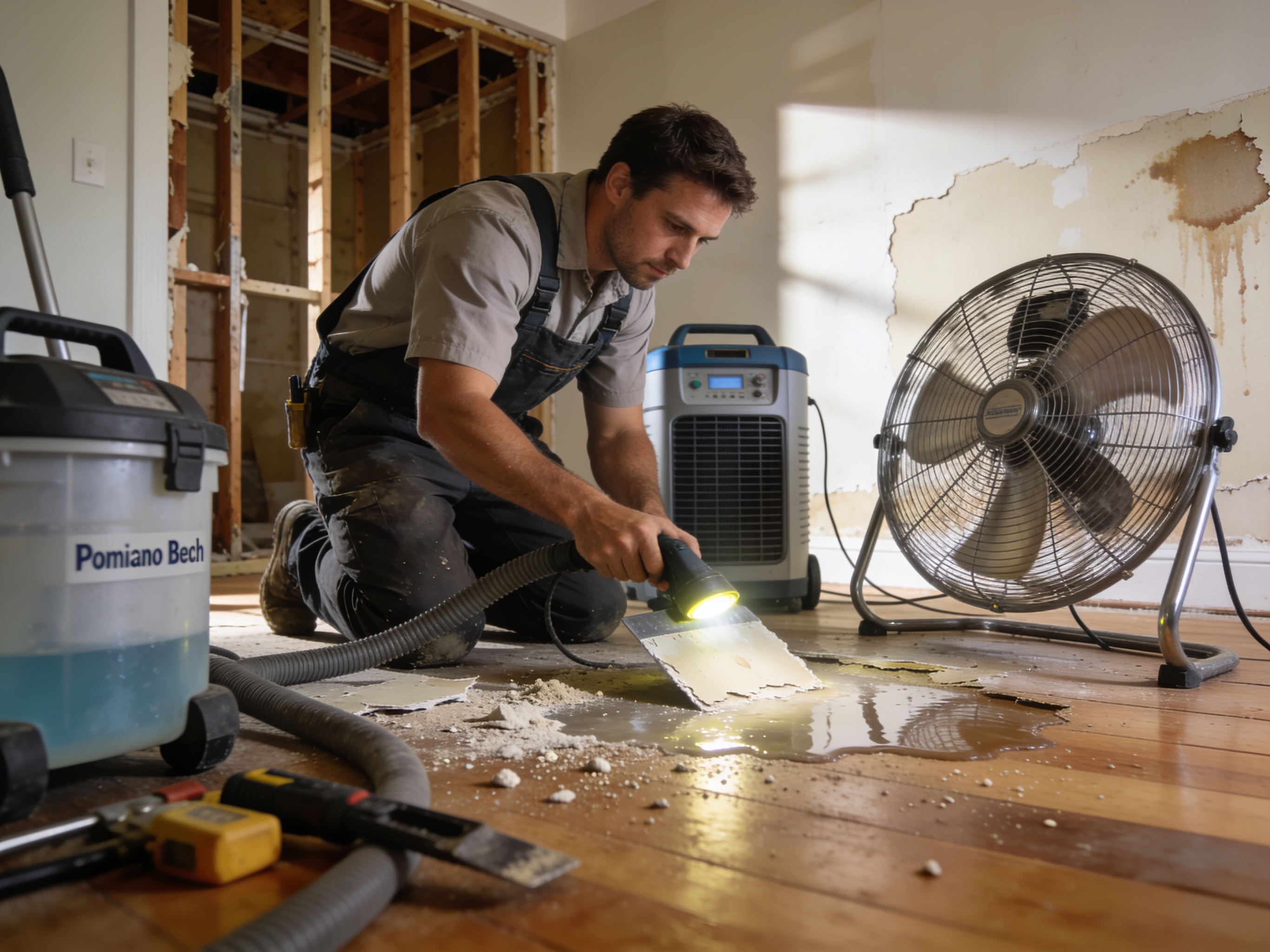
Why Pompano Beach Homeowners Choose Us for Water Damage Repairs
Water damage repairs in Pompano Beach, FL start with a full-area assessment before scoping, not a quick look at the most visible stain. Water can move behind baseboards, under flooring, into cabinet cavities, and up drywall, so the affected area is evaluated to identify where moisture traveled and which materials can be dried in place versus removed.
Drying is verified before any repair is closed up. Replacing drywall, trim, or flooring over hidden moisture can trap water inside the building. Moisture readings are taken before and after drying so decisions are based on measured conditions. This supports repair-versus-remove honesty: some materials can return to service after proper drying and cleaning, while others swell, delaminate, or remain at risk. The call is explained in plain language before work moves forward.
For storm-caused losses, documentation of storm-caused damage for the homeowner's records matters. Photos of the damage as found, notes about where water entered, and a written scope create a clear record, especially when wind-driven rain affects one area and a separate leak affects another.
When permits apply, the work follows the correct local route. In the City of Pompano Beach, building permit applications may be submitted online through Click2Gov or in person at the Building Department counter, and review is conducted electronically through ePlan. Work may not begin until a required permit is issued. If a repair scope triggers permitting, that requirement is addressed up front.
Why Water Damage in Pompano Beach Should Not Wait
Water damage in Pompano Beach should be addressed promptly because moisture keeps moving after the initial event. Even when standing water is gone, wet materials can continue wicking into drywall and insulation. That hidden moisture weakens finishes and can make later repairs larger than the visible damage. Flooring/cupping and subfloor damage can occur when materials stay damp, making it harder to tell what can be saved and what must come out.
Another risk is hidden moisture feeding mold growth behind walls, under flooring, or inside cabinetry. A room may look dry on the surface while materials underneath remain wet. When that happens, the scope can expand to addressing affected materials and the moisture source. If you suspect growth after a leak or storm, the mold remediation service page explains how moisture and affected materials are evaluated.
In Broward County, a second wetting compounding an unrepaired first loss is a real concern. Coastal South Florida sees heavy rain, and storm season can bring wind-driven rain that tests windows, doors, roofs, and exterior penetrations. A system that never fully dried is more vulnerable when water returns. The April 2023 event in Broward County is referenced here only as labeled county context. The practical lesson is simple: repairs should be scoped from verified dry conditions, and vulnerable areas should be evaluated before the next round of weather.
Waiting can also blur the record of what happened. Materials may be moved, temporary patches may hide entry points, and stains may spread. A timely assessment preserves clearer information about the source, the path of water, and the materials affected.
Proof: How a Repair Is Scoped and Verified
A water damage repair is scoped and verified through documented steps that show what was affected, what was dried, and what needs to be rebuilt. The process begins with a whole-area assessment. That includes visible surfaces, adjacent rooms where water may have traveled, and materials that commonly hold moisture, such as drywall, insulation, baseboards, flooring layers, and cabinet toe-kicks. The purpose is to define the true boundary of the loss before deciding what to remove or replace.
Moisture readings before and after drying guide the plan. Initial readings help locate wet materials. Follow-up readings confirm whether materials have reached appropriate dry conditions before repairs are closed up, because a wall can feel dry while the cavity behind it remains damp. Photos of findings document conditions, damaged materials, and areas of concern.
A written scope before work explains what was observed, what materials are recommended for removal, what can remain in place, and the sequence of work. In many cases, extraction and drying must be completed before repair work can be planned responsibly. When that sequence applies, the water extraction service explains the role of removing water and drying the structure before reconstruction decisions are finalized.
If the scope requires permitting, the permit route is stated clearly. For projects in Pompano Beach, applications go through the City of Pompano Beach Building Department using Click2Gov and ePlan for electronic review. The City's process includes concurrent review disciplines such as Building, Electrical, Mechanical, and Plumbing, as applicable. Work may not begin until a required permit is issued.
The Scenario Most Pompano Beach Repair Pages Skip: The Storm Repair That Starts as Documentation
A common scenario after a Broward storm is a split problem: wind-driven rain damage in one room, and a soaked wall from a failed window seal in another. The repair cannot be scoped honestly until conditions are documented and the full path of water is understood.
The first step is a document-first sequence: take photos as found before anything is moved. Photos should show affected rooms, visible entry points, the height and spread of staining, swollen materials, and any contents in contact with water. Notes should distinguish what was observed in each area. This matters because storm damage vs pre-existing wear for the homeowner's records can exist in the same home. Aged sealant or older finish damage may be present, but the record should describe conditions as observed without assumptions.
After documentation, the job moves to extract and dry. If water remains in flooring, wall cavities, or contents, the repair scope should not be finalized from wet conditions alone. Water removal and structural drying come first so moisture readings show what materials are doing. The water extraction service covers removing water, drying affected materials, and verifying conditions before rebuilding decisions are made.
Only after assessment and verified drying should the permitted repair scoped from the full assessment move forward. That scope may include removing damaged drywall, replacing insulation where appropriate, repairing or replacing flooring components, reinstalling trim, and addressing the opening that allowed water in. If a window seal failed, the source must be stopped before walls are closed. Temporary measures to prevent further entry may be needed while the full repair is planned.
This approach is relevant in Broward County, where a severe weather period can affect many properties. The April 12–13 2023 rainfall event in Broward County is referenced as a labeled county-wide event with no Pompano Beach damage count. For a homeowner, the useful takeaway is the sequence: document first, extract and dry, assess the full affected area, then scope the repair from verified conditions.
Water Damage Repairs in Pompano Beach, Up Close
Drywall, Flooring and Trim Repair After Water Damage
Drywall, flooring, and trim repairs depend on how far moisture traveled and how long materials stayed wet. Drywall cut vs dried is decided from measured conditions: limited saturation may allow drying in place, while loss of rigidity, wet insulation, or higher-risk exposure may require removal. In saturated drywall, the cut line is set above the wick line so damp material is fully removed. Flooring types that survive vs fail vary; some hard surfaces tolerate limited exposure, while engineered or laminate flooring that has swelled at the seams rarely returns flat. Baseboard/cabinet water paths often hide wet edges and gaps, so toe-kicks and trim areas need checking. Matching finishes honestly is part of the conversation: the goal is a sound repair, and any limits on matching existing materials should be explained before work begins.
Storm Damage Restoration
Storm damage restoration addresses water that enters the home during severe weather. Common wind-driven rain entry points include windows, doors, roof penetrations, flashing transitions, soffits, and exterior openings. The first priority is documenting as-found condition with photos and notes before materials are disturbed, photographing each entry point as found before temporary coverings go on. Pre-existing wear is noted separately in the same record. Temporary measures to stop further entry may be needed, handled safely while the full repair is planned. The assessment also separates storm damage vs wear for records, since aged sealant, older stains, or long-term trim deterioration may exist alongside fresh storm damage. Once the area is dry and the source is addressed, the repair can be scoped from verified conditions.
Leak-Source Repair and Prevention
Leak-source repair and prevention start with the cause: the source fixed first. Rebuilding over an active moisture source leads to repeat damage. Before walls, floors, or cabinets are closed, the area should be checked to verify source stopped before closing walls, and moisture at the source location is re-checked after the repair. Closing a wall over an unverified source restarts the damage cycle. The repair sequence follows the conditions found; if water remains, the extraction/drying sequence comes before reconstruction. Some leaks require when a plumber or other trade is the right call, such as pressurized plumbing, fixture connections, or appliance lines outside building-material repair. Stating that clearly helps avoid a cosmetic fix that leaves the real cause in place.
Repairing After Sewage or Flood Water
Repairing after sewage or flood water requires a health-first framing without invented certifications. Contaminated-water materials handling matters because porous materials that absorb water may not be appropriate to keep after exposure; porous materials touched by contaminated water are removed rather than cleaned. The plan should address safe removal of affected debris and identify what cannot be salvaged based on material type, extent of exposure, and observed conditions. Cleaning before rebuild comes next, and the structure is cleaned and dried before any rebuild material goes in so new materials are not placed over contaminated surfaces. Decisions should be explained clearly, and work should move ahead only after the affected area has been evaluated and the scope reflects the realities of contaminated-water damage.
Water Damage Repair Questions Pompano Beach Homeowners Ask
Do I need a permit for water damage repairs in Pompano Beach? It depends on the scope of the work. Some repairs may involve building, electrical, mechanical, or plumbing elements that trigger permitting, while limited surface repairs may not. In the City of Pompano Beach, building permit applications can be submitted through Click2Gov, and review is conducted electronically through ePlan. The City's process can include concurrent review across relevant disciplines. Work may not begin until a required permit is issued. The safest step is to confirm the scope with the City of Pompano Beach Building Department before repairs that may require approval begin.
Can water-damaged drywall always be dried, or does it have to come out? No. Water-damaged drywall does not always need to be removed, but it cannot always be saved either. The answer depends on how saturated the drywall became, how long it stayed wet, and whether contamination is involved. Moisture verification helps determine whether the material has dried to an acceptable condition and whether the wall assembly behind it is also dry. If drywall has lost strength, insulation is wet, or conditions suggest a higher-risk exposure, removal may be the more responsible choice.
What should I do first after storm damage to my home? Start with safety. Avoid hazards such as standing water near electrical sources or unstable materials. If it is safe to do so, take photos of the damage before anything is moved so the as-found condition is documented. Take reasonable steps to stop further entry, such as preventing additional water from coming in where that can be done safely. After that, arrange an assessment so the affected area can be evaluated and a written scope can be prepared. This documentation-first approach helps clarify what was damaged without making promises about outcomes.
How much do water damage repairs cost? The cost of water damage repairs depends on several factors, including the extent of the damage, the materials affected, the source of the water, how long moisture was present, and the amount of drying or removal needed before repairs can begin. A repair that involves limited finishes is very different from one that requires opening walls, replacing flooring layers, or coordinating permitted work. The most useful way to understand the scope is through an assessment, moisture verification, and a written plan that explains what needs to be done and why.
If your property has water damage and you need a clear repair plan in Pompano Beach, call (954) 994-1851 or use the contact page to request an assessment.